
Mutation / Khata Transfer cannot ordinarily be used as conclusive ownership proof in Telangana. It shows that the revenue record has been updated after a sale, inheritance, partition, gift, court order or another recognised event. This makes mutation an important supporting record, but it does not by itself create, transfer or extinguish title. Ownership must still be established through the underlying registered deed, succession documents, partition records, government grant, court decree or other legally valid source of title.
Can Mutation / Khata Transfer Be Used as Ownership Proof in Telangana?
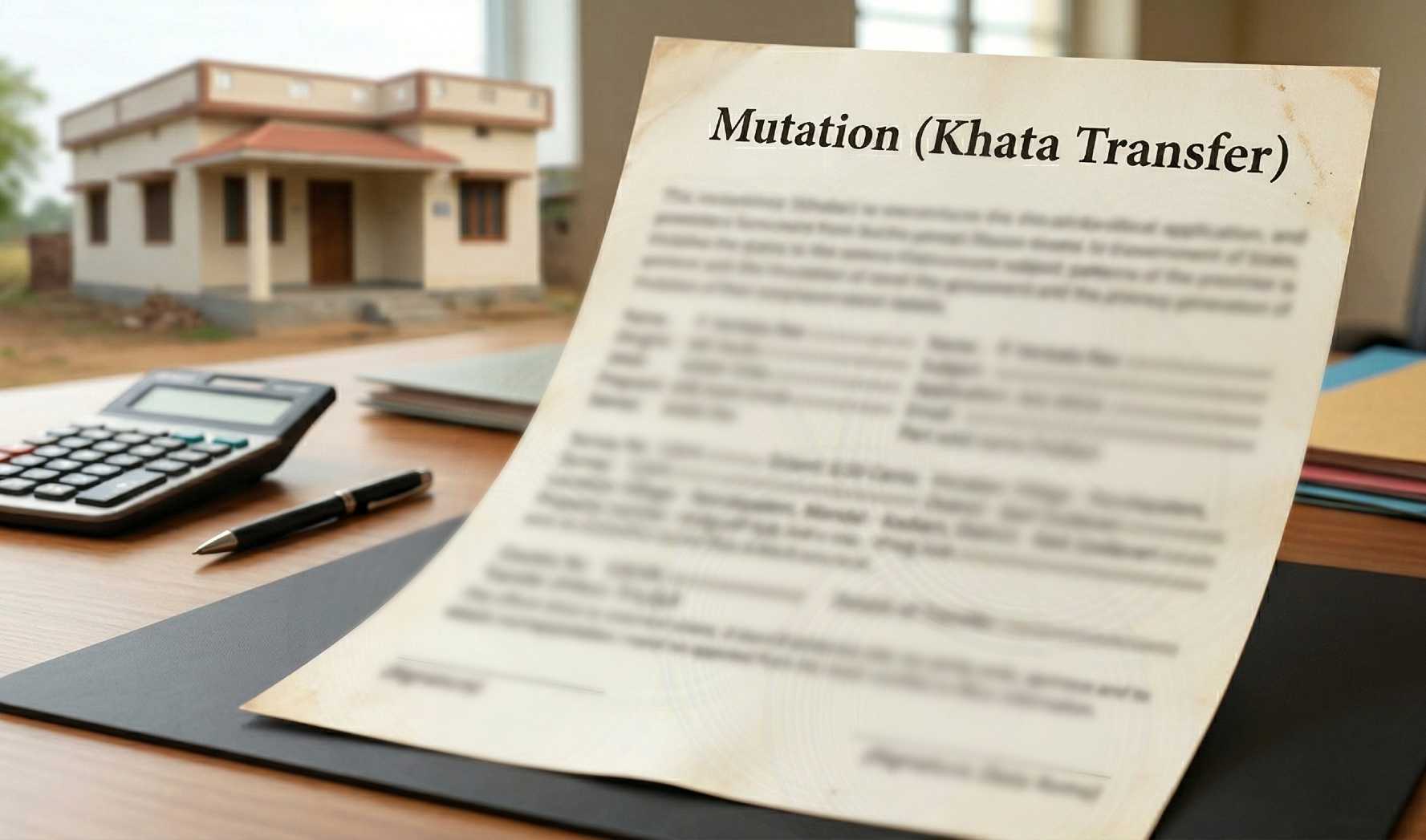
You can get the Mutation/Khata Transfer easily via mypatta without visiting the Sub-Registrar office.
- Open mypatta and log in or sign up if needed.
- Go to property documents, ensure “Telangana” is selected as the state, then tap the “Mutation/Khata Transfer” icon.
- Enter required information.
- Tap “Search”
- Once Tippan Map is available to download, tap “View Document”. You can now save or share or download this document in PDF on your device
What Does Ownership Proof Mean in a Land Transaction?
Ownership proof means evidence showing how a person legally acquired rights over a specific land parcel and whether those rights continue to remain with that person.
A complete ownership claim should explain the earlier owner, the mode of transfer, the inclusion of co-owners or heirs, and any later transaction affecting the property.
Different records perform different functions. A registered sale deed records a transfer. A partition deed divides jointly held rights. Succession documents explain how land passed after an owner’s death. Survey records identify the land and its boundaries. Mutation updates the person’s name in the revenue system.
The legal right usually comes from the deed, succession, grant or court order. Mutation records that change for revenue administration.
Where Does Mutation / Khata Transfer Fit in the Ownership Evidence Chain?
Mutation / Khata Transfer fits into the ownership evidence chain as a revenue-record update. In Telangana, mutation may follow a registered sale or gift, inheritance, partition, court decree, correction order or another recognised change affecting the land record.
After mutation, the new name and land particulars may appear in the Record of Rights or Pattadar Passbook. This connects the claimant with the land for revenue purposes.
However, mutation authorities update the record on the basis of documents placed before them. A mutation entry does not replace those documents. If the underlying transfer or succession is legally defective, mutation cannot cure that defect.
Mutation is therefore a middle link between the underlying transaction and the current revenue record.
What Can Mutation / Khata Transfer Legally Establish?
Mutation / Khata Transfer can establish or support the present revenue-record position of the land.
It may show that:
- the claimant’s name has been entered as pattadar or revenue-account holder;
- the record was updated after a registered transfer;
- succession or partition was reflected in the land record;
- a survey number, sub-division and extent are linked to the entry; and
- the Pattadar Passbook or ROR corresponds with the mutation.
Its value becomes stronger when these details match the deed, current ROR, Pattadar Passbook, Encumbrance Certificate and survey records.
For example, if a purchaser has a registered sale deed and the same survey number and extent appear in the mutation record and Bhu Bharati details, mutation supports the claim by showing consistency between title and revenue records.
What Can Mutation / Khata Transfer Not Establish?
Mutation / Khata Transfer cannot independently establish a complete, valid and marketable title.
By itself, it does not prove:
- that the transferor was the true owner;
- that the earlier title chain was complete;
- that the sale, gift, partition or succession was valid;
- that all heirs or co-owners transferred their shares;
- that the land was not later sold, mortgaged or attached;
- that no civil dispute or competing claim exists; or
- that the physical boundaries match the entry.
A person may obtain mutation on the basis of documents that are later challenged. If a court finds that the underlying sale deed was invalid, the mutation entry cannot preserve title.
Mutation in favour of one heir also does not automatically extinguish the rights of other heirs. If succession or partition is disputed, the title question may require adjudication.
A pending mutation does not always defeat title, but the reason for the delay should be checked because it may reveal an objection or mismatch.
When Can Mutation / Khata Transfer Strengthen an Ownership Claim?
Mutation / Khata Transfer can strongly support an ownership claim when it follows a valid source of title and matches the other property records.
Its value is stronger when:
- mutation is based on a registered deed, valid succession or court order;
- the mutated name matches the person claiming ownership;
- the survey number, sub-division and extent match the title deed;
- the current ROR and Pattadar Passbook carry the same particulars;
- the Encumbrance Certificate shows no conflicting later transfer;
- survey maps identify the same parcel; and
- no court order or prohibited-property entry conflicts with the mutation.
Mutation is useful in showing continuity between a legal transaction and the current revenue record. Its value is weak where the claimant has only a mutation entry but cannot produce the document on which it was based.
Which Documents Carry Greater Weight Than Mutation / Khata Transfer?
| Document | Role in Ownership Verification |
|---|---|
| Registered Sale Deed | Records the transaction through which rights were transferred |
| Mother Deed and Link Documents | Trace title from earlier owners to the present claimant |
| Gift, Partition or Release Deed | Shows transfer, division or relinquishment of rights |
| Succession Documents | Explain how land passed after an owner’s death |
| Government Grant or Valid Patta | May establish the original source of land rights |
| Court Decree or Order | May declare or determine ownership rights |
| Encumbrance Certificate | Helps identify registered transfers, mortgages and charges |
| Current ROR and Pattadar Passbook | Support the present revenue-record position |
| Survey Map, Tippan and Sub-Division Records | Help verify identity, measurements and boundaries |
| Mutation Order | Shows the basis and authority for the revenue update |
The strongest claim arises when the title document, mutation order, revenue record, registration history and survey details refer to the same owner and parcel.
Why mypatta?
- Trusted by 7 Lakh+ Customers
- 1 Crore+ Documents Delivered
- mypatta Guarantee – Your money is safe with us. Guaranteed delivery or a 100% amount refund.
- 4.8 Star App Rating
Your money is safe with us - guaranteed delivery or a 100% amount refund
FAQs
- 1. Can mutation alone prove ownership in Telangana?
No. Mutation is a revenue-record update. Ownership must be established through a registered deed, valid succession documents, partition records, court decree or another recognised source of title.
- 2. What legal value does Khata Transfer have?
It supports the current revenue-record position and may show that the claimant’s name was entered after a transfer, inheritance, partition or official order
- 3. Does mutation in the buyer’s name make a defective sale deed valid?
No. Mutation cannot cure a defective sale deed. The buyer’s rights depend on the validity of the underlying transaction.
- 4. What if the sale deed is registered but mutation is pending?
The deed may still be relevant to title, but the reason for pending mutation should be checked, including objections, record mismatches and application status.
- 5. Which documents should be checked with Mutation / Khata Transfer?
Check the mutation order, registered sale deed, Mother Deed, link documents, current ROR, Pattadar Passbook, Encumbrance Certificate, succession or partition records, survey maps and prohibited-property status.