
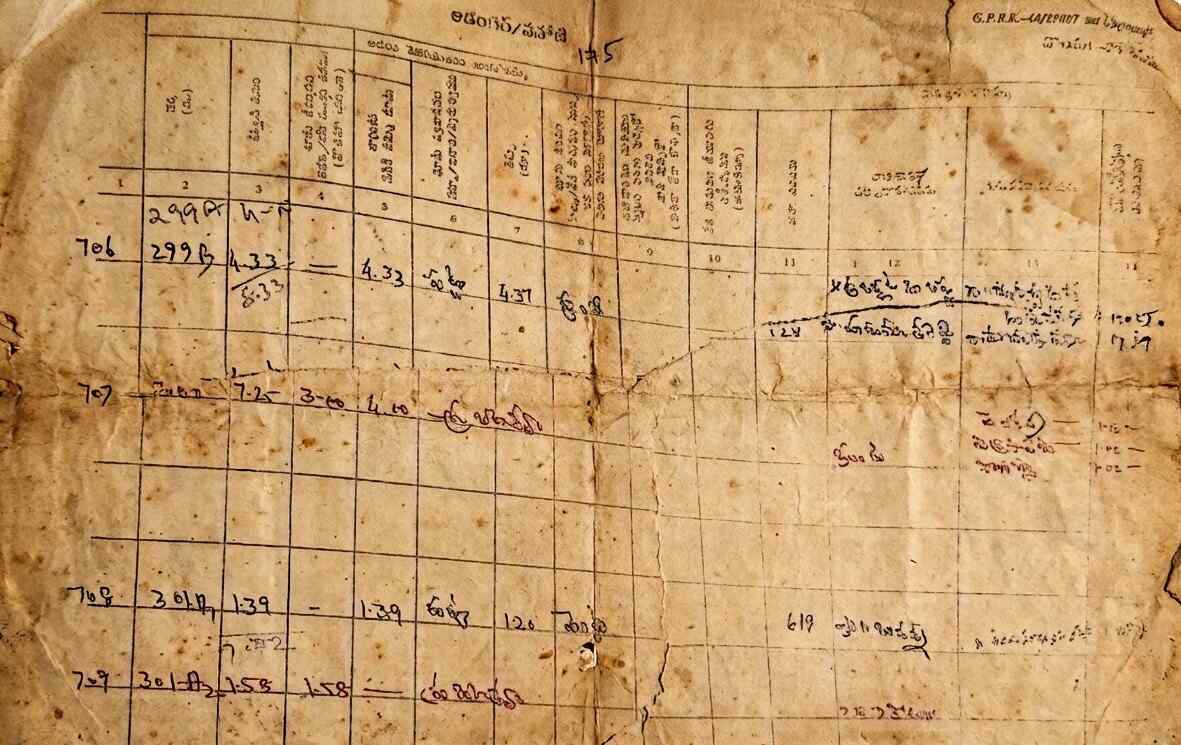
Old Pahani / Old ROR can be used as supporting evidence in an ownership claim in Telangana, but it cannot ordinarily be treated as conclusive ownership proof by itself. These records may show historical pattadar details, survey numbers, land extent, cultivation or possession-related entries and land classification. However, ownership must primarily be established through valid title documents such as a registered sale deed, gift deed, partition deed, succession documents, court decree or another legally recognised source of title.
Can Old Pahani / Old ROR Be Used as Ownership Proof in Telangana?
You can get the Old ROR online easily via mypatta without visiting the Sub-Registrar office.
- Open mypatta and log in or sign up if needed.
- Go to property documents, ensure “Telangana” is selected as the state, then tap the “Old ROR” icon.
- Enter required information.
- Tap “Search”
- Once Old ROR is available to download, tap “View Document”. You can now save or share or download this document in PDF on your device
What Does Ownership Proof Mean in a Land Transaction?
Ownership proof means documents that explain how a person legally acquired rights over a specific property and whether those rights continue to remain with that person.
A land record containing a person’s name is not automatically the same as a title document. Different records perform different functions:
- A registered sale deed records a transfer of property.
- A partition deed shows how jointly held land was divided.
- Succession documents explain how property passed after an owner’s death.
- Revenue records show how land is entered for administrative and revenue purposes.
- Survey records identify the land’s measurements and boundaries.
A person claiming ownership should be able to establish a legally connected chain from the earlier owner to the present owner. The documents should also consistently identify the land through details such as village, survey number, sub-division number, khata number, extent and boundaries.
Old Pahani or Old ROR may contribute to this evidence chain by showing how the land was historically recorded. However, it does not necessarily explain the legal transaction through which ownership was created or transferred.
Where Does Old Pahani / Old ROR Fit in the Ownership Evidence Chain?
Old Pahani / Old ROR fits into the ownership evidence chain as a historical revenue record.
Pahani is commonly associated with agricultural land records. Depending on the period and format, it may contain information relating to:
- survey number and sub-division;
- khata or revenue-account details;
- pattadar or recorded landholder;
- cultivator or person shown in enjoyment;
- land extent;
- land nature or classification;
- crop and cultivation details; and
- other revenue-related remarks.
The Record of Rights, or ROR, records rights and interests reflected in the revenue system. An old ROR may help trace how the land was entered before later sales, inheritance, partitions, subdivisions or corrections.
These records are valuable where the land has a long history, the seller claims ancestral ownership, or present digital records do not clearly explain earlier entries. They may also help connect an old survey number with a current sub-division or identify when a different family name first appeared in the revenue record.
However, Old Pahani / Old ROR is not normally the document through which ownership is transferred. It records a position in the revenue system and therefore acts as supporting historical evidence.
What Can Old Pahani / Old ROR Legally Establish?
Old Pahani / Old ROR may support several facts concerning the history and identity of land.
It can help establish or indicate:
- that a particular name was historically entered against the land;
- that the land was associated with a specified survey number;
- the extent recorded during a particular period;
- possession, enjoyment or cultivation-related entries;
- the historical nature or classification of the land;
- continuity or change in revenue entries over time; and
- the possible connection between an earlier landholder and the present claimant.
For example, if a seller claims that agricultural land belonged to their family for several decades, old Pahani records carrying the names of the seller’s predecessors may support the historical background of that claim.
Old records may also help where the present survey number resulted from a subdivision. The earlier record can be compared with survey proceedings, current ROR-1B and land parcel maps to determine whether the old and present parcels correspond.
Their value becomes stronger when the entries are consistent with:
- registered title deeds;
- mutation proceedings;
- succession or partition records;
- current Bhu Bharati records;
- survey and boundary documents; and
- physical possession.
Old Pahani / Old ROR can therefore strengthen the factual foundation of a title claim. Its value depends on whether the underlying legal documents support the same claim.
What Can Old Pahani / Old ROR Not Establish?
Old Pahani / Old ROR cannot independently prove that the person named in the record has a complete, valid and marketable title.
By itself, it may not establish:
- how the recorded person acquired ownership;
- whether the earlier owner had transferable title;
- whether a sale, gift or partition was legally valid;
- whether all legal heirs or co-owners were included;
- whether the land was transferred after the date of the old record;
- whether any mortgage, attachment or court dispute affects the land;
- whether the recorded extent remains available with the seller;
- whether the land is legally transferable; or
- whether the land shown physically matches the recorded parcel.
A person may be shown as pattadar, cultivator or possessor in an old record without having a complete title document. Similarly, a person who genuinely purchased land through a registered deed may not immediately appear in the revenue record if mutation was delayed.
Historical revenue entries may also become outdated. The land may subsequently have been sold, partitioned, acquired, subdivided or affected by government restrictions.
An entry cannot cure a defective transfer. If the person from whom the claimant purchased the land did not have valid title, the existence of Pahani entries in the claimant’s favour would not automatically validate the transaction.
When Can Old Pahani / Old ROR Strengthen an Ownership Claim?
Old Pahani / Old ROR can substantially strengthen an ownership claim when it forms part of a continuous and consistent set of records.
Its evidentiary value is stronger when:
- the old recorded landholder is connected to the present owner through valid deeds or succession documents;
- the survey number and extent match the registered title documents;
- changes in survey or sub-division numbers are officially explained;
- mutation entries follow valid transfers;
- current ROR-1B and Bhu Bharati records support the same title chain;
- survey maps and physical boundaries identify the same parcel;
- the land classification does not create a transfer restriction; and
- no conflicting deed, court order or government claim exists.
For example, an old Pahani shows land in the name of a person’s grandfather. After his death, succession documents identify the legal heirs, a registered partition deed gives the relevant land to the seller’s parent, and a later registered deed transfers it to the seller. Current ROR-1B and survey records carry matching details. In that situation, the old Pahani strengthens the title by supporting the historical continuity of the land record.
The position is much weaker where the seller relies only on an old Pahani carrying an ancestor’s name but cannot produce documents showing inheritance, partition or later transfer.
Which Documents Carry Greater Weight Than Old Pahani / Old ROR?
The following documents generally carry greater or more direct weight when legal ownership is being established:
| Document | Role in Ownership Verification |
|---|---|
| Registered Sale Deed | Records the transaction through which ownership rights were transferred |
| Mother Deed and Link Documents | Trace the title from earlier owners to the present claimant |
| Gift, Partition or Release Deed | Shows transfer, division or relinquishment of property rights |
| Succession and Inheritance Documents | Explain how rights passed after an owner’s death |
| Court Decree or Government Grant | May create, recognise or determine rights in the land |
| Current ROR-1B and Mutation Records | Support the present revenue-record position |
| Encumbrance Certificate and Registered Document Search | Help identify registered transfers, mortgages and charges |
| Survey Map, Tippan or Land Parcel Map | Helps verify the identity, measurements and boundaries of the land |
| Prohibited-Property and Land-Classification Records | Help determine whether the land is legally transferable |
The strongest ownership claim is created when the title documents, old and current revenue records, registration history and survey details consistently refer to the same land and owner.
FAQs
- 1. Can Old Pahani alone prove ownership in Telangana?
No. Old Pahani is a historical revenue record. It can support an ownership claim but should be backed by registered title deeds, succession documents or other legally valid ownership records.
- 2. What legal value does Old ROR have in Telangana?
Old ROR may support historical landholder, survey, extent, possession and revenue-related details. Its value increases when it is consistent with valid title documents and current records.
- 3. Is a registered sale deed stronger than Old Pahani?
Yes. A registered sale deed is directly connected with the transfer of property rights. Old Pahani mainly records the historical revenue position of the land.
- 4. What if Old Pahani and current ROR-1B show different names?
The title chain, mutation proceedings, succession documents and registered transfers should be checked to understand how and why the recorded name changed.
- 5. Which documents should be checked with Old Pahani / Old ROR?
Check the registered sale deed, Mother Deed, link documents, current ROR-1B, mutation records, Encumbrance Certificate, succession or partition documents, survey maps and prohibited-property status.