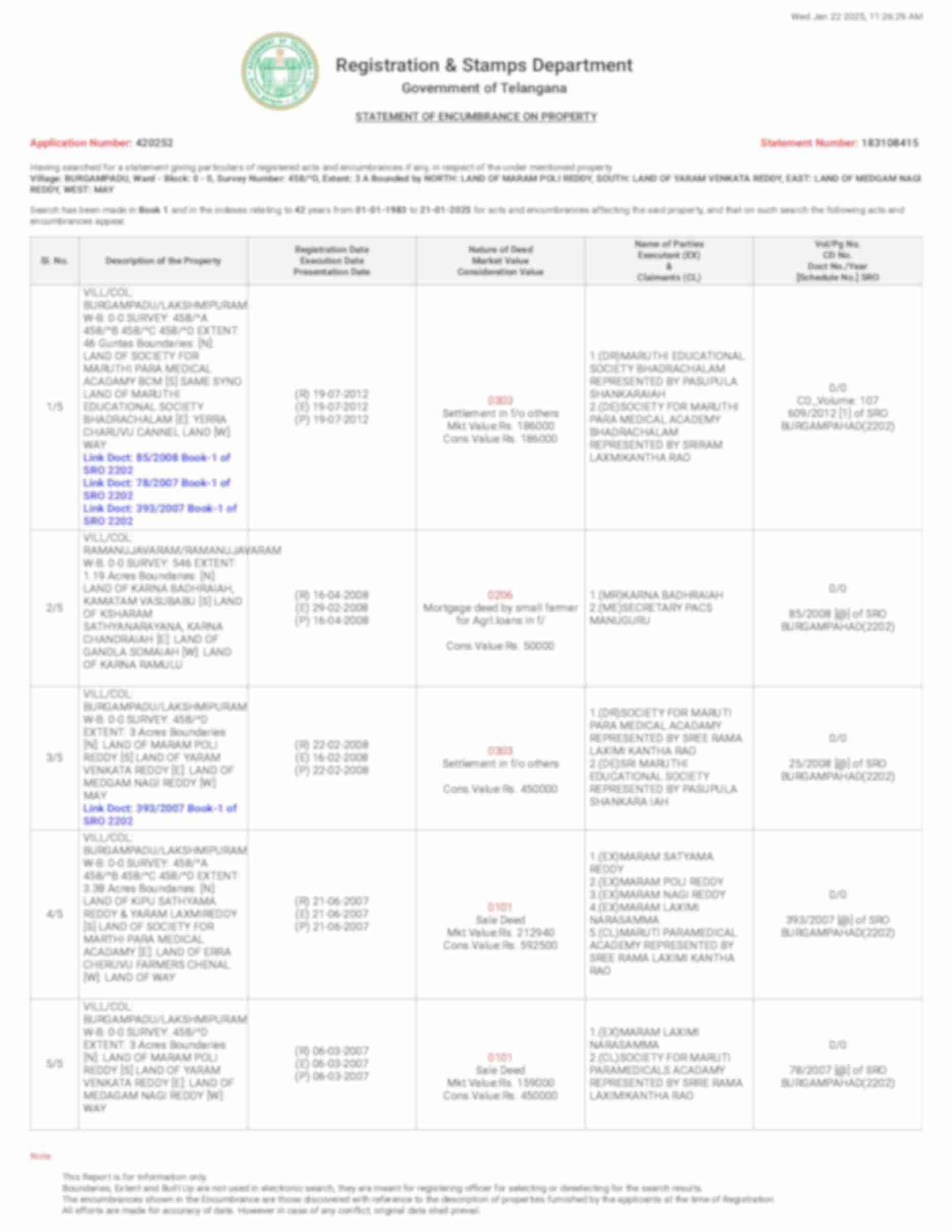
An Encumbrance Certificate (EC) in Telangana is an official document issued by the Registration Department that provides details about financial or legal liabilities on a property, such as mortgages, loans, or disputes. It ensures the property is free from encumbrances and is crucial for property transactions, loan applications, and legal verifications. The EC records all transactions related to the property, making it a reliable source to verify ownership and dispute-free status.



Happy customers

Docs downloaded

Safe & secure
Many users opted for expert consultation while ordering Certified Copy/Nakal


 Safe & Secure
 Fast & Guaranteed Delivery
 Trusted by 4 Lakh+ Customers
What details are included in an Encumbrance Certificate in Telangana?
An EC includes details like the property owner’s name, property description, transaction history, mortgage or loan details, and any legal disputes or encumbrances related to the property.
What are the different types of Encumbrance Certificates?
Telangana provides two types of ECs: (1)Form 15: Lists all transactions and encumbrances on the property. (2)Form 16 (Nil Encumbrance Certificate): Certifies that no encumbrances exist during the specified period.
What is a Nil Encumbrance Certificate?
A Nil Encumbrance Certificate (Form 16) certifies that there are no financial or legal encumbrances on the property during the specified period.
Can an Encumbrance Certificate show joint ownership of a property?
Yes, if a property has joint ownership, the EC will reflect the names of all owners and their respective shares or interests in the property as recorded in the transactions.
What is the difference between Encumbrance Certificate and Sale Deed?
An Encumbrance Certificate shows the transaction history and liabilities on a property, while a Sale Deed is a legal document that proves the transfer of ownership from the seller to the buyer. Both are important but serve different purposes.
How far back should I check the Encumbrance Certificate for a property?
It’s recommended to check the EC for at least 20 to 30 years, depending on the legal and financial requirements, to ensure there are no hidden liabilities or disputes.