Introduction
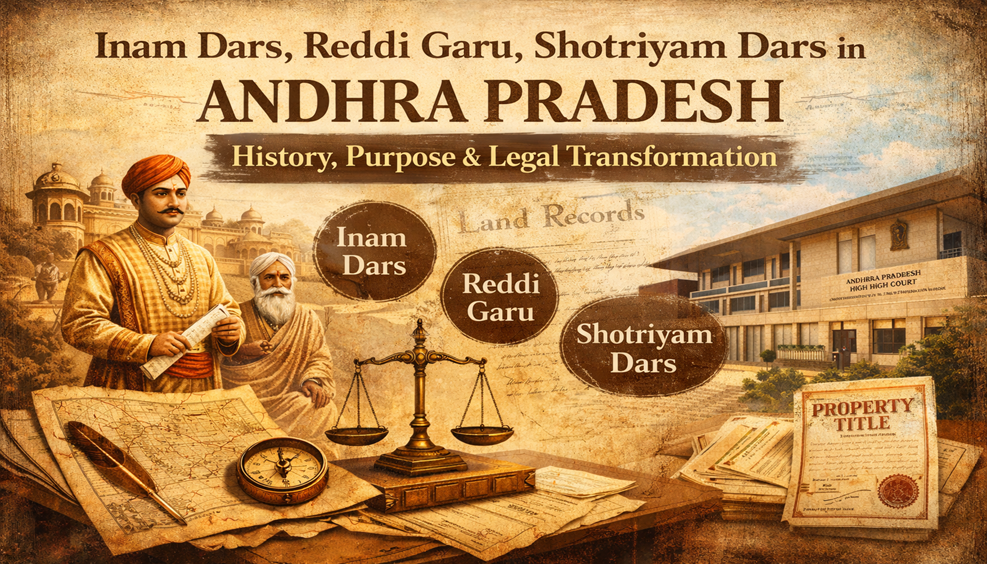
Land in India has always been more than just property — it’s a symbol of service, status, and legacy. Before Indian independence, Andhra Pradesh had several land-grant systems such as Inam Lands, Shotriyam Dars, and Reddi Garu Lands, created by local kings and later recognized by the British land administration.These lands maintained temple services, village administration, and social welfare.This blog focuses exclusively on Inam Lands, their purpose, legal recognition, British administrative transformation, and post-independence changes.
What are Inam Lands?
Inam Lands were grants made by the rulers or the state to individuals or institutions for public, religious, or charitable purposes. The word “Inam” is derived from Persian, meaning gift or reward.
Purpose of Inam Lands
- To reward those who rendered service to temples, education, or administration
- To maintain temple activities — priests, cooks, caretakers
- To support Brahmins, scholars, poets, and social workers
These grants formed the backbone of temple administration and village welfare in pre-independent Andhra Pradesh.
British Administration & Legal Transformation
When the British took control of the Madras Presidency (which included today’s Andhra regions), they formalized all land-grant systems to create a uniform revenue structure.
How the British Handled Inam Lands
The British recorded, verified, and classified every Inam land under:
- Inam Fair Registers (IFR)
- Praimasi Registers
- Inam Title Deeds (Inam Pattas)
Their goal was to determine:
- Whether the Inam Dars were legitimate
- Whether the land was service-based, religious, or personal
- Whether revenue exemptions should continue
These records form the foundation of today’s Inam land verification and are critical for modern land title checks.
Examples of Inam Lands
Temple Inams
- Lands donated to temples for rituals and maintenance
Service Inams
- Lands granted to village service providers — potters, blacksmiths, temple priests
Charitable Inams
- Lands given to schools, mathas, community wells
- These examples show how Inam Lands shaped religious services, local employment, and social development.
Post-Independence Transformation
After independence, the government abolished all intermediary land systems through:
- Madras Estates Abolition Act 1948
- Inam Abolition Act 1956 (Andhra Inams Act)
Under These Acts:
- Inam Lands were abolished
- Converted into Ryotwari Patta Andhra Pradesh lands
- Ryotwari Pattas were issued to the actual cultivators (ryots)
- Inam Dars lost their hereditary revenue rights
This transformed ancient land grants into modern agricultural landholdings.
Present Legal & Ownership Implications
Today, most of the lands once classified as Shotriyam, Inam, or Reddi Garu lands have been transformed into:
- Ryotwari agricultural lands, or
- Residential layouts with Collector NOCs.
- However, the title history of these lands is deeply rooted in old estate records.
Any modern buyer must verify:
✔ If the land was converted under proper G.O. notification.
✔ If Ryotwari Pattas were issued by the Settlement Officer.
✔ If the chain of ownership documents is continuous and valid.
Why This Matters
In districts like Anantapur, Kadapa, Kurnool, and Nellore, disputes over Shotriyam or Inam lands still surface — often due to lack of understanding of these old grants.At mypatta, we’ve seen many land cases where missing Inam or Ryotwari records cause legal complications during registration or resale.
That’s why mypatta’s document verification services focus on:
- Tracing old Inam and Settlement records.
- Checking Gazette Notifications and G.O.s.
- Verifying Ryotwari Pattas and Collector NOCs.
- Providing legal clarity through historical document tracing.
Need Help Verifying Your Land Documents?
mypatta provides trusted land document verification services in Andhra Pradesh, helping you quickly access EC, CC, Adangal, ROR-1B,Manual EC ,Ryotwari Patta & Inam Record Verification ,Legal Opinion for Inam and Estate Lands and complete legal verification directly from SRO and MRO offices.
Whether you are buying, selling, or validating property details, our experts ensure accurate, government-verified land records without any hassle.
- 📞 +91 91774 58818 – Call us for instant assistance with EC, CC, Adangal, ROR-1B, and legal verification.
- 📩 contact@mypatta.com –Email us for detailed guidance or document-related queries.
- 🧑⚖️ Property Verification – Talk to a land records specialist for accurate property verification.
Key Takeaway
The systems of Shotriyam Dars, Inam Dars, and Reddi Garu lands were not just administrative titles — they were the pillars of traditional village governance, education, and culture in pre-independent Andhra Pradesh. From royal rewards to Ryotwari Pattas, these lands tell a powerful story of service, transformation, and law. Understanding this history isn’t just academic — it’s essential for anyone buying, selling, or verifying land in Andhra Pradesh today.