Chandrasekhar
Very useful app. Easy to use and it made my life easy. Very good customer support.



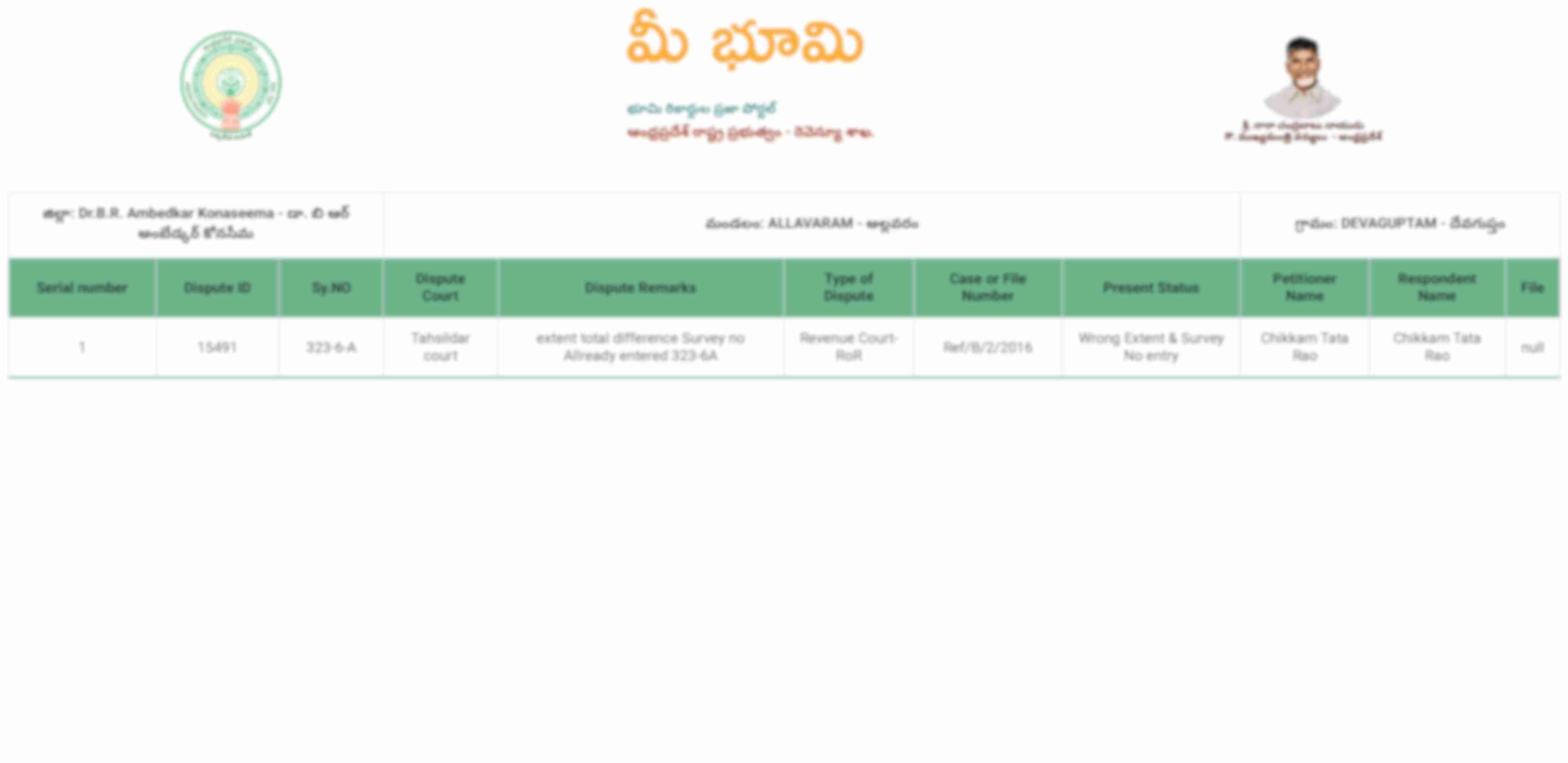
Land disputes are conflicts arising over ownership, possession, or usage rights of land. In Andhra Pradesh, these disputes often stem from outdated records, inheritance claims, encroachments, or improper land use. They can involve individuals, families, or institutions and sometimes include government or communal lands. Resolving such disputes requires access to accurate land records, legal interventions, and arbitration by competent authorities like revenue courts or civil courts. Addressing land disputes effectively is crucial for ensuring legal clarity, smooth property transactions, and sustainable land management.



5 Lakh+
Happy customers

80 Lakh+
Docs downloaded

100%
Safe & secure

15000+
User Consultations
Many users opted for expert consultation while ordering Certified Copy/Nakal


 Safe & Secure
 Fast & Guaranteed Delivery
 Trusted by 4 Lakh+ Customers
What are common causes of land disputes in Andhra Pradesh?
Common causes include unclear ownership, boundary disagreements, encroachments, inheritance claims, and overlapping claims on land due to outdated or inaccurate records.
How can I verify ownership to avoid land disputes?
You can verify ownership by checking the following: Record of Rights (ROR-1B), Encumbrance Certificate (EC), Prohibited Properties Register, Property tax receipts and survey maps. All these documents you can get easily through mypatta app.
Can land disputes delay property transactions?
Yes, unresolved land disputes can delay or invalidate property transactions, as clear ownership and title are essential for legal transfers.
Can boundary disputes be resolved through a land survey?
Yes, boundary disputes can often be resolved by conducting a land survey through authorized government surveyors, who will demarcate the exact boundaries.
Can a property with a land dispute be sold?
Selling a property under dispute is not advisable and may not be legally valid. The dispute must be resolved, and ownership clarified before any sale.
Can land disputes be resolved outside of court?
Yes, many land disputes can be resolved through alternative dispute resolution (ADR) methods like mediation or arbitration, which are often quicker and less expensive than court proceedings.
Very useful app. Easy to use and it made my life easy. Very good customer support.
Good Experience after using this app. Very useful and time saving process.
Good helpful information about agriculture lands.
Phenomenal!! I got my required documents in one day.